Sub-Total: $0.00
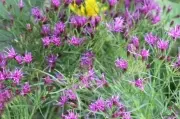
Ironweed – Common or Smooth (3.25″ pot)
$7.95
Vernonia fasciculata
Description
Common Ironweed, also called Prairie or Smooth Ironweed. Vernonia fasciculata
Leaves have pointed tips, sometimes purple-edged, no obvious midvein. Flowers are densely packed in corymb style. Blooms earlier than Tall Ironweed, in early summer.
Note that V. fasciculata can be very aggressive – probably best to plant where it has room or to use to compete with an exotic invasive – could work to push out purple loosestrife… Common Ironweed spreads by seeds and by rhizomes, which form dense mats that are extremely hard to pull out. If you don’t have a proper place for this plant, try N.Y. Ironweed or Tall Ironweed, which don’t form the mats of spreading rhizomes. Or if you don’t mind a cultivar – “Iron Butterfly” is a great choice – it is not at all aggressive and provides similar support as the pure native non-cultivar species.
Great in a polliator-friendly and native garden or any natural setting. Great for cut flowers as well.
Foliage is bitter and repels mammals from browsing, but plants in the Vernonia genus are host plants for a variety of moth and butterfly larvae and other insects, including: American Lady butterfly (Vanessa virginiensis), Parthenice Tiger Moth (Grammia parthenice), Ironweed Borer Moth (Papaipema cerussata and Papaipema limpida), Eupatorium Borer Moth (Carmenta bassiformis), Red Groundling moth (Perigea xanthioides), Pyralid Moths (Polygrammodes flavidalis and Polygrammodes langdonalis), Ironweed Plume Moth (Hellinsia paleaceus), Ironweed Curculio Weevil (he larvae of this weevil feed on the pith of ironweeds), Midges (including Asphondylia vernoniae and Youngomyia podophyllae) which form galls on the plant’s buds and flower heads. Many of the larval species bore into / eat the roots and stems, perhaps helping to balance the aggressive nature of Common Ironweed’s rhizomes.